Back in the late 90’s and early 2000’s, the hottest chef in Boston was Todd English. He initially had two restaurants in Charlestown, where he and his family lived. Figs was the more casual pizza place that my friend Leah and I loved and frequented on our girls nights out. Olives, however, was the flagship and the most difficult place to secure a table in it’s heyday. People would line up in hopes of getting a table, as it they didn’t take reservations. When Dennis and I were first dating and he was in town for a weekend while I was still living in the Boston area, we decided to try our luck to see if we could get in. Fortunately for us, my brother Gary lived right up the street at the time, so we were able to walk over and successfully get our name on the list and then go back to his place to hang out for the several hours wait for our table. The signature dish was the Braised Lamb Shanks, which was what I ordered and they were delicious.

I had the opportunity to meet Todd at a book signing for the release of his cookbook “The Figs Table”. My friend Leah had already given me that book for my birthday, so I decided to buy his previously released “The Olives Table”. As I flipped through the pages awaiting my turn to meet Todd and have my book signed, I was delighted to see the recipe for the lamb shanks I had enjoyed at that dinner with Dennis just a few weeks before. As my turn approached, I’m sure I was star struck, as it was like meeting a celebrity for me as a fledgling foodie, but I was taken aback by his brusqueness and lack of interest in engaging. Perhaps he was uncomfortable out of his element in the kitchen and irritated by the need to signed hundreds or more books for the long line of excited fans. In any event, I left a bit deflated at the thought that he was rather arrogant and had become rather taken with himself as a result of a steady diet of rave reviews and accolades. Perhaps I wasn’t off, as his popularity was soaring and he was in the midst of creating his restaurant “empire”, opening Olives in Las Vegas, New York and multiple international locations along with developing other concepts. Sadly the time away from Olives in Charlestown took its toll and the quality suffered. After several closures due to citations by the Health Department and no fewer than 3 fires, Olives in Charlestown closed for good in 2013.

But I digress . . . I have made the Ginger Braised Lamb Shanks from “The Olives Table”, and while delicious, I have tweaked things over the years. When we decided to host our first dinner party following our move to Houston, I wanted to do something Mediterranean that could largely be made ahead that would minimize the amount of time at the stove so that I could visit with our guests. My favorite store, Central Market had beautiful looking lamb shanks from Colorado, so thought this might be the perfect dish, especially given the weather had turned chilly, ideal for a hearty braised dish. Lamb can be very polarizing, people either love it or hate it, so I did a quick pulse check with our guests and I was in luck, everyone liked lamb. The verdict was “delicious” and I hope you’ll agree. A fantastic Bordeaux from St Emilion, heavy with merlot, is a perfect pairing.

MEDITERRANEAN BRAISED LAMB SHANKS

ktinakelleher
These lamb shanks are full of Mediterranean flavors and make a delicious one dish dinner served over mashed potatoes, as the onions, fennel and chickpeas provide the vegetables. Perfect for a snowy day where you don't want to leave the house, as they require several hours of braising in a low oven. I've also made these on Christmas Eve, popping them in the oven before heading out for mass. The meat becomes super tender and is literally falling off the bones. The flavors intensify if you make them a day in advance. These are a great meal when entertaining, as they can be made in advance and kept warm in the oven until you are ready to serve, leaving you free to visit with your guests.
Cook Time 3 hours
Course Main Course, Meat
Cuisine Mediterranean
Servings 4 people

Equipment

  • Dutch Oven

Ingredients
  

  • Lamb Shanks
  • 1/2 Cup Olive Oil estra virgin
  • 2 Cups Onions, thinly sliced 1 very large or 2 medium onions
  • 2 Cups Fennel (Anise), cored & thinly sliced 1 large or 2 medium bulbs
  • 6 Cloves Garlic, minced
  • 1/4 Cup Fresh Ginger, minced Peel & mince in a small food processor
  • 1 Cup Balsamic Vinegar
  • 3/4 Cup Red Wine
  • 1/2 tsp Fennel Seeds
  • 1/2 tsp Crushed Red Pepper Flakes
  • 2 tsp Cumin ground
  • 1 tsp Kosher Salt Morton's
  • 1/2 tsp Black Pepper freshly ground
  • 4 Cups Beef Stock or Broth
  • 2-4 Cups Chicken Stock or Broth
  • 1 Can Fire Roasted Tomatoes, including juice 29 ounces
  • 1 Can Chick Peas, drained 29 ounces
  • 3 Sprigs Fresh Rosemary

Instructions
 

  • Allow the lamb shanks to come to room temperature (about 30-45 minutes before you are ready to cook) and sprinkle with salt and pepper.
  • Measure the spices out into a small ramekin or a cup.
  • Heat 2 TBSP of olive oil in a large Dutch Oven over medium high heat. When the oil is hot, add the lamb shanks and brown on all sides, being careful not to burn, reducing the heat if necessary. Lamb has a lot of fat and creates a lot of smoke, so be sure to use your exhaust fan.
  • Remove the shanks from the pan and place on a plate/platter.
  • Wipe the pan clean with a paper towel, being careful not to burn yourself.
  • Preheat your oven to 300* (or 275* on convection, which I prefer). Set your oven racks to the lower third, ensuring there is room for your Dutch Oven (you may need to remove a rack).
  • Add the remaining 2 TBSP of oil to the pan and return to medium heat. Add the onions and fennel and saute until just softened.
  • Add the ginger and garlic and stir for 1 minute, making sure not to let the garlic burn.
  • Add the spice mixture and mix well.
  • Add the Balsamic Vinegar and Wine and bring to a boil. Reduce the heat to medium and allow to reduce by about half.
  • Add the tomatoes and their juices, the chick peas and 4 cups of beef stock and 2 cups of chicken stock.
  • Return the shanks to the pan and spoon the vegetables over them so they are nestled into the liquid and vegetables. If there is not enough liquid to cover the shanks fully, add another 2 cups of chicken stock, or a bit more if necessary.
  • Add the Rosemary sprigs. Increase the heat and bring to a boil.
  • Place the pot in the oven, uncovered, and cook for 3 hours until the meat is very tender and falling off the bones.
  • Serve with Mashed Potatoes and ladle the vegetables over the top.

Notes

KTINA’S TIPS:
  • I prefer Colorado lamb, it is much milder in flavor than Australia or New Zealand lamb and may convert those that recall the gamey lamb of their childhoods.  It’s worth sourcing.  
  • Lamb shanks are relatively inexpensive, so provide a great dish without breaking the bank.  If you don’t see them at your butcher, ask, as they may have them in back, often frozen.  
  • I like to use a large oval Le Creuset Dutch Oven when I’m making 4-6 lamb shanks.  
  • I like the Muir Glen brand of Fire Roasted Tomatoes.  You don’t need organic, but sometimes that’s all I can find. 
Keyword Braised, Lamb, Lamb Shanks, Mediterranean

Those were the exact words my friend Joe commented on my first post after a long hiatus! Really, who decides to embark upon a major renovation in the midst of a pandemic and a severe disruption in the supply chain resulting in LONG delays in furniture and appliances? Well, we did, that’s who. As if packing up and moving from Chicago after being happily settled there for 10 years, wasn’t enough of a challenge, what started out as a little “tweaking” of the kitchen in our newly purchased Houston home turned into a total gut job. In for a penny, in for a pound, right? We were lucky to find a contractor who could start right away and his 90 day timeline didn’t seem unreasonable in February, bringing us to about Memorial Day. I had been through a complete renovation of our Chicago kitchen, and I was pretty clear on what I wanted, so I set about making selections of appliances and fixtures. I was advised that appliances were backordered by about 12 weeks, which didn’t seem like such a big deal since the mid-May delivery dates I was being quoted seemed just about in keeping with the timeline.

Well, that was the week before the historic freeze that hit Houston in mid-February, shutting the city and its power grid down for the better part of a week. Once the power grid was restored and burst pipes repaired and thus water restored, we thought we were back on track. Then came the great national foam shortage. As we all know, foam is needed for furniture, but it is also necessary for insulation in appliances such as the refrigerators, freezers and ice maker that I had just ordered. It turns out several of the largest foam manufacturers are in Houston and they were victims of the freeze. Our 12 week backorder more than doubled with mid-September the new estimated delivery time. This was going to be painful.

The contractors were back on track in a mere 2 weeks and were making great progress with the cabinets. I pivoted with selections if something was backordered and the new kitchen began to take shape. We were looking at a late June move in, which was only a month off, and I know from experience that you need to tack on a few weeks to keep expectations in check and frustration at bay. We anxiously awaited word on the wood for the flooring as lumber prices soared, and we breathed a sigh of relief when it arrived a week early,

Our pack up in Chicago was scheduled for the third week of June, so we let the contractor know he had a hard deadline of June 29th, at which point we would be moving in. The walls of the temporary apartment that we were in since the end of January were beginning to close in on us and with our belongings packed up in Chicago and headed to Houston, it was “ready or not, here we come”. The painting contractor brought in extra crews and the house was habitable, though we still were waiting for appliances. We moved the refrigerator that came with the house to the laundry room, and the washer and dryer were in, so we could manage. In late August the refrigerator/freezers arrived and we seemed to be close to the finish line. Then the project manager quit…not our job, but the contractor. Thankfully, one of the partners took charge and set about fixing the things the project manager had dropped the ball on. Clearly he had “left” before giving his notice, and there was a long list of things that were wrong (outlets for refrigerators too high and needed to be moved), broken (cracked mirror on a new piece of furniture) or lost (like all the doorknobs removed by the painters that we planned to reuse). The profit margin was dwindling, but while that wasn’t our problem, and it was our problem, as the delays continued due to the need to order replacements, reschedule installations, and make repairs.

Meanwhile, furniture ordered in the spring began to arrive . . . Dining room table and chairs, the extra counter stools for the kitchen island, so the house was starting to look like a home. Finally in early October the range arrived and was installed! There was still a hole for the further delayed ice maker, but at long last we were operational and ready to host our first dinner party!

While the move from Chicago to Houston was emotional, the transition has been made easier thanks to the blessing of great friendships . . .both those we have known for many years from our time in London together and are like family, as well as new friends who have welcomed us with open arms. The menu of a Mediterranean Mezze with Hummus (HUMMUS), Tabbouli (TABBOULI) & Olive Sourdough Bread (SOURDOUGH BREAD), Braised Lamb Shanks and Creme Brulee was a hit (recipes coming).

The long renovation was worth it and KtinasKitchen is officially Back in Business…new recipes and posts on the way!

Oh yeah, the ice maker arrived the Tuesday before Thanksgiving, and the panel is finally being installed next week!

I am an accidental bread baker, having received a “gift” of some sourdough starter from my friend Jenny in November of 2020. I felt that I owed it to her thoughtfulness to keep the starter alive and try my hand a making bread. I was rewarded with early success and have become hooked. Since I am an intuitive cook and, as I’ve said many times before, typically prefer cooking to baking, the recipe I included in my post “A Gift That Keeps Giving” needed some tweaking to provide more details. I have also learned a lot from my own baking successes and failures, and have adjusted things and the results are much more consistent, with loaves that rise beautifully and are not as dense. Hopefully the revised recipe is more clear and the visuals are helpful.

SOURDOUGH BREAD

ktinakelleher
This bread is so easy and delicious you may never buy a loaf again. The most important ingredient is mature sourdough starter, which you can keep in your refrigerator and feed once a week until you are ready to bake.
Other than the starter, you need TIME, as the dough will need to proof for 8-12 hours before you can bake it. The amount of time to proof will vary depending on a number of factors, including temperature (70-80* is ideal)and humidity. The warmer it is, the less time the dough will take to proof and the more humid it is, you may need to add more flour so the dough isn't too sticky.
Depending on your schedule, you can either prepare the dough in the evening and allow it to proof overnight and bake in the morning, or prepare it in the morning and bake in the evening. If you're an early bird, you can make your dough, proof and bake in time for dinner.
Once you master the basic sourdough, try adding olives (my favorite), herbs, nuts or seeds. You can also experiment with other types of flour, such as whole wheat, rye, etc.
Prep Time 12 hours
Cook Time 45 minutes
Course BREAD
Cuisine American
Servings 1 Loaf (Boule)

Equipment

  • Dutch Oven (I use a 5 1/2 quart Le Creuset)
  • Large Bowl
  • DRY Measuring cups
  • Measuring spoons
  • 2 Cup or larger LIQUID measuring cup
  • Rubber spatula (or Spoonula)
  • Disposable kitchen gloves (I like the Nitrile ones)
  • Parchment Paper or Baking Sheets (I prefer the individual parchment baking sheets, so much easier)

Ingredients
  

  • 1/3 Cup Sourdough Starter heaping
  • 1 3/4 Cups Water (warm) (make sure the water is not above 120*)
  • 4 1/4 – 4 1/2 Cups Bread Flour (start with 4 1/4 cups)
  • 2 tsp fine Sea Salt

Instructions
 

  • If it has been a while since you fed your starter, then you will need to feed it 8 hours before baking to ensure it has at least doubling in size, which means it is strong enough to make the bread rise. If you have been feeding your starter regularly, you can use it straight from the fridge as long as it has been fed within 7 days.
  • Place 4 1/4 cups of flour and 2 tsp of sea salt in a large mixing bowl.
  • Measure a heaping 1/3 cup of the starter in a dry measuring cup. It will be quite sticky. Add the starter to the water, after a couple of seconds it should float, which means your starter is strong and active.
  • Whisk the starter and the water together until the starter is dissolved and you have a murky liquid.
  • Mix the wet and dry ingredients with a rubber spatula (Spoonula) until a shaggy dough begins to form. The dough will be quite stiff and at this point you may wish to ditch the spatula and use your hands.
  • Using your hands (with disposable gloves), knead the dough until all of the flour is incorporated and there are no dry streaks or lumps. If the dough is sticking to your gloves (and to the sides of the bowl), add more flour, 2 TBSP at a time and work it into the dough.
  • Continue to add a bit more flour until the dough no longer sticks to your gloves or the sides of the bowl.
  • Continue to knead the dough until it is fairly smooth and form it into a ball.
  • Cover the dough with plastic wrap or a damp kitchen towel and allow to proof for at least 8 and up to 12 hours in a warm place free of drafts. The ideal temperature is 70-80*.
  • After "proofing" your dough should have risen and approximately doubled. It should have a curved dome and look a bit like a distended belly. If you gently poke it with a floured finger, it should slowly come back.
  • Line a clean bowl with baking parchment. Make sure to use a parchment that can take high heat, as you will be baking at 450-475*. I prefer the brand IF YOU CARE, available at Whole Foods, Target, Amazon and many other specialty stores and buy the pre-cut sheets, which are so much easier to work with.
  • With wet fingers (or using gloves), scrape the dough away from the bowl and gather it into a ball. Grabbing one side, lift it with both hands and raise it high above the bowl and allow it to stretch. As it returns to the bowl, fold it over itself. It will be sticky, but should not be too loose or stick to the bowl once you gather it together. If it is sticking to the bowl, add a touch more flour, a tablespoon at a time.
  • Wait about 90 seconds and repeat the stretching 2 more times. (During the 3rd stretch, the dough may not stretch as high and may require you to pull from all sides.) After the 3rd stretch, mound the dough into the parchment lined bowl, shaping it so the "seam" is on the bottom. Dust the dough lightly with flour and place in the refrigerator while you heat your dutch oven.
  • At this point you may refrigerate your dough for up to 3 days before baking.
  • Heat oven to 475* (or 450* on convection setting, which is what I use).
  • Place the dutch oven (covered) in the oven while it is preheating and allow it to heat for 45 minutes to an hour.
  • When the oven is ready, remove the dough from the refrigerator. Using kitchen shears or a very sharp knife, cut a long slice in the top of the dough or several slices to make an X or flower pattern.
  • Carefully remove the dutch oven and remove the lid. Lift the dough by the corners of the parchment and place in the dutch oven. (I leave the dutch oven on the rack and remove the lid, drop in the dough and replace the lid.)
  • Cover and bake for 25 minutes.
  • Remove lid and bake for an additional 15-20 minutes until dark golden brown.
  • Remove to a rack and allow to cool for an hour before slicing.

Notes

KTINA’S TIPS
  • If you are lucky enough to have a friend (like me) to share starter with you then you are good to go.  I have shared my starter with many friends, who have shared with others, so it has proliferated all over the place now.  I’m happy to send some to you if you don’t know someone who has some.   Otherwise, if you’re have the time and up for the challenge, you can easily make your own starter in about a week. There are many websites, including King Arthur, that provide instructions.   
  • If you keep your starter in the fridge and it has been fed within the past 7 days, you can use it directly from the fridge, but I have found better results when I leave the starter on the counter for about a 1/2 hour before preparing the dough. you should notice it rising while it comes to room temperature.  
  • THE FLOAT TEST – if you are not sure if your starter is good to make bread or needs to be fed, try dropping a spoonful of starter into a cup of warm water.  Wait a minute or so, and if the dollop floats to the top, then your starter is strong enough to make bread – bake away!  
  • I have found my best loaves are made with starter that has been fed within 4 days, as they seem to rise a bit higher producing loaves that a little less dense. 
  • Friends have suggested that once they have formed their loaf they let the dough rise a little bit more (another couple hours on the counter) and get fluffier loaves.   
  • FEEDING YOUR STARTER – Once a week or each time you bake
    1. Mix 1/2 Cup starter with 3/4 Cup plus 2 TBSP All purpose flour and 1/2 Cup warm water.
    2. Place into a wide mouth mason Jar (1 quart) and place the cover askew to allow air to get in.  Let sit in a warm place for up to 8 hours or until it has doubled in size.
    3. Secure the cover and store in the refrigerator until you are ready to bake. 
    4. Discard the remainder of the old starter or share with a friend or discover a recipe that calls for “sourdough discard”.  
  • There is no limit to how frequently you can feed your starter.  If you are baking frequently, you will need to feed it more frequently since you will only have enough starter to make 2 loaves of bread and still have enough to feed and keep it going.
  • NEED MORE TIME?  Once you have formed your loaf, you can refrigerate it for up to 3 days before baking.  I have also found that by placing my dough in my kitchen in the winter (which is about 60*) that the proofing can go as long as 16 hours without overproofing . , , or just pop it in the fridge.  
  • IN A RUSH?  You can speed up the proofing process by placing your dough in a warmer environment . . . in the summer I place mine in our sunroom which does not have air conditioning and it is ready in 8 hours . . . I also tried putting it in the garage on a hot day (securely covered, of course) and it was ready in 6 hours.  DO NOT place it in your oven with the light on, as it will get too warm and overproof.  
  • OLIVE BREAD
    1. Substitute 1 1/4 Cups Whole Wheat flour for a cup of the Bread flour (ie:  3 Cups bread flour and 1 1/4 Cups whole wheat flour). 
    2. Stretch the proofed dough as above, but after the 3rd stretch turn it onto a lightly floured surface and press out (like you’re making pizza).
    3.   Sprinkle 1 Cup mixed pitted olives and press in lightly.  (I like to use a blend of pitted Castelveltrano and Kalamata olives, but experiment with what you like.)
    4. Roll the dough over, jelly roll style and then form into a ball, securing the seam at the bottom, place in the parchment lined bowl, dust with flour and place in the fridge while the dutch oven heats and bake in the same manner as above.
Keyword Baking, Bread, Sourdough, Sourdough Bread

I haven’t written much recently because I have been in project management mode in preparation for our move from Chicago to Houston. Since mid January, we have purchased a new home in Houston, Dennis started a new job, we embarked on a renovation project involving a gut rehab of the kitchen, and have been preparing our Chicago home to go up for sale. It’s a lot of work staging one house to sell while decorating another, especially in two different cities that requires me to zigzag back and forth every other week. Managing contractors, plumbers, electricians, painters, real estate agents and decorators doesn’t leave much time for cooking. Not to mention our temporary accommodations in Houston are not as not as well equipped as my Chef’s kitchen in Chicago, which means we have been eating out a lot. Who would have thought a year ago when we were DYING to go to a restaurant that we would be sick of eating out!

On my last trip back to Chicago, I thought I better clean out the refrigerator and noticed the sourdough starter that I had been neglecting over the past several weeks. It looked pretty sickly, with a watery layer covering the gluey flour mixture. I opened it and gave it a sniff and it smelled pretty much the same as the last time I had fed it back in late February. After a quick Google search to inquire about how to tell when sourdough starter had gone off, it didn’t seem that it was exhibiting any of the symptoms of death (namely a red/orange streak or mold growth), so I decided to try feeding it to see if there was still any life in it.

I fed it and left it to sit out overnight and when I went to the kitchen to make coffee, I was pleasantly surprised to see that the starter still seemed to have life in it. It had more than doubled overnight, though did seem to be a bit less lively than when I had been feeding it regularly. I did a little more research and learned that it is suggested to feed “neglected” started more frequently until it doubles in 8 hours (or less), so I fed it again and left it on the counter while I went about my chores for the day. When I checked back later that afternoon, it had more than doubled in 8 hours, so it seemed that I hadn’t killed it after all! The only way to find out was to try making bread.

Since it was 9 pm on Wednesday evening and I was flying back to Houston on Thursday afternoon, it was now or never. I made a batch of dough and folded it over once. The recipe calls for letting it rest and repeating the stretch and folding process, so I went to wash my face and brush my teeth so that I could crawl into bed immediately. Truth be told, the second fold and stretch never happened as I fell asleep while waiting the extra 20 minutes since I was so tired. I woke up on Thursday morning to see the abandoned dough and the television still on, The dough had risen overnight, so I rather than discard it, I thought I may as well conclude my experiment and see just how robust this stuff is. I stretched the dough, prepared my dutch oven and preheated the oven.

When the timer went off after 25 minutes, I lifted the lid expecting that it would be a dud, but was pleasantly surprised to see the bread looked just like the success loaves I had baked since receiving the starter from my friend Jenny. I returned it to the oven for the remaining 20 minutes. It was nice and brown and although it was not as high as some loaves I had made, it certainly had risen and looked like a beautiful sourdough boule. As I removed it from the pot and placed it on the cooling rack, I could hear it crackling as the dough continued to expand. An hour later, I cut into it for the final test . . . it was delicious! I texted Jenny to tell her that i hadn’t killed the starter after all, to which she replied “it’s impossible to kill!” I brought the loaf to Houston with me and it made for a tasty avocado toast with an over easy egg for breakfast.

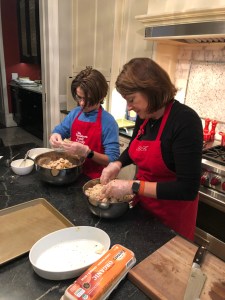
Last, but not least, it was Timmy Lynch’s turn to spend the day in the kitchen with me. As the youngest at 8 years old, (and 11 and 8 years younger than older brothers Billy and joe) “the Caboose” is not very adventurous about food, so I wasn’t sure what we were going to cook. He announced during Joe’s Spaghetti & Meatballs dinner “I want to make Fried Chicken when it’s my turn”, which I thought was funny since we had already made it together before Christmas. It’s his choice, so fried chicken it would be, but if he thought he was taking the easy way out by choosing something he knew didn’t involve knives he was in for a surprise.

What goes better with fried chicken than Potato Salad?? So, while the chicken was brining, the first order of business was to get the potatoes prepped to cook, which meant cutting them into smaller pieces and using a knife. I know his mother would have been cringing and worried about a trip to the emergency room, but with some instruction and careful supervision Timmy did a great job and not a drop of blood was shed. While the potatoes were boiling and I chopped the celery, onions and dill, I put Timmy in charge of making the dressing, which is essentially a lot of measuring, so no sharp objects involved (I figured I’d quit while I was ahead on the safety front).

With the potato salad done, it was time to take the chicken out of the brine and rinse it. While the chicken came to room temperature, we had time to make an appetizer to serve when the rest of the Lynch clan arrived to snack on while the chicken was cooking. Guacamole is a hit with everyone, so we got to work on making it. Once again, I took care of the chopping and mincing, but Timmy was in charge of the rest. One perk of being the chef is you get to be the taste tester and dip the first chip. “Delicious” was the verdict and we were ready to focus on the main event.

Now we were ready to go and the Lynches arrived just in time to watch the fried chicken production. We set up a dredging station with the seasoned flour and buttermilk. I heated the oil and dunked the chicken pieces in the flour, then buttermilk, then flour again and it was ready to be fried. We may have survived the knives, but now we had to face hot oil, so safety was key to ensure we wouldn’t be heading to the burn unit. I took care of the frying and Timmy whisked up the Honey Hot Sauce.

At last it was time to eat . . . some champagne for the grownups, which is the perfect pairing. It was a deliciously fun day and the rest of the Lynch clan loved it all. As a bonus they took home leftovers for dinner another night (or two). Timmy declared he “didn’t care for” the potato salad, but I guess that’s an 8 year old’s palate. He was a great helper and I can’t wait for him to come back to my kitchen to cook something else.

After the Spaghetti and Meatball factory closed, it was nephew, and Dennis’s godson, Billy Lynch’s turn to spend the day in Ktina’s Kitchen. As a sophomore in college on break, I thought getting him to commit to a day might be a challenge, but he enthusiastically committed to the Sunday following Joe’s day as a chef. Like his brother, I had an idea of what his favorite meal that I cook is, so it was no surprise when his response to what he would like to cook was Thai Peanut Noodles and Asian Pork.

The first order of business was to make the marinade so we could get the pork marinating. Since a lot of the ingredients in the peanut sauce are also in the marinade, we got going chopping lots of fresh ginger and peeling the cloves from 2 heads of garlic. Thankfully the Cuisinart mini-prep took care of all the chopping, and then it was all about measuring and pouring ingredients into the blender and Voila, marinade done. We made a double batch so Billy had some to take home to share with the rest of the Lynch clan and to try with a different protein another time. Once the pork was covered and in the refrigerator soaking up the flavors, it was time to make the peanut sauce. Just as the blender took care of most of the work on the marinade, the food processor did the heavy lifting for the sauce. With the garlic and ginger already prepped, it was measure, pour, whiz and the sauce was done. Now all we had to do was to slice the garnishes for the peanut noodles and we were good to go.

Since the peanut sauce is the basis for Chicken Satay, we pulled a chicken breast out of the freezer and thawed it for an appetizer. In keeping with #trysomethingnew, I also pulled out some Tom Yum Goong broth that I had in the freezer. While Billy has never been a seafood fan, he agreed to try the soup, which is “Hot and Sour Shrimp Soup”. He loves spicy food, and the Tom Yum Goong is very spicy since it includes Thai Red Curry Paste, and fish sauce and lime juice add salty, sour flavors. It turns out 19 is a lot different than 9 and he not only tried the soup, he liked it!

Now it was time for the main event , . . once the pork was on the grill, we poured the marinade into a sauce pan and brought to it a boil to kill off any bacteria and allowed it to reduce to make a syrupy sauce. We assembled the peanut noodles and it was time to eat. Everything was delicious and Billy devoured tons of pork (we cooked 2 and there was not a speck leftover). I guess it really is his favorite meal! We had a great time and the best compliment was that Billy said he wanted to come back to cook again before he returned to school later in the month.

ASIAN MARINADE & SAUCE

Course Main Course
Cuisine Asian, Thai

Ingredients
  

  • 1 jar 8-10 ounces Hoisin Sauce
  • ½ Cup Orange Juice pref fresh
  • ¼ Cup chopped Ginger about 4” piece
  • 3 cloves of Garlic
  • ½ Cup Soy Sauce or Tamari for gluten free
  • ¼ Cup Rice Wine Vinegar
  • ¼ Cup Sesame Oil
  • ½ Cup packed Brown Sugar
  • ¼ Cup Honey
  • ½ bunch Cilantro rinsed (leaves & stems)
  • 1 fresh Fresno pepper or long Thai Chili or a Jalapeno seeded
  • ½ tsp freshly ground Black Pepper
  • 1-2 tsp Hot Chili Oil to taste, optional

Instructions
 

  • Place all ingredients except chili oil in a Vitamix, blender or food processor fitted with a steel blade and process until smooth.
  • Taste and add 1-2 tsp chili oil if you prefer a bit more spice.
  • BARBECUE SAUCE:
  • Pour 1 ½ cups of the marinade into a small sauce pan over medium-high heat. Bring to a boil and reduce until the sauce thickens, about 15 minutes, stirring frequently.

Notes

KTINA’S TIPS
  • This marinade works well with just about any protein: Chicken, Pork, Beef, Duck, Shrimp or firm Fish such as Halibut, Tuna or Swordfish.
  • Pour sauce over until well covered and refrigerate several hours or overnight. I find a Ziploc bag works well to allow even distribution of the marinade.
  • While grilling the meat, pour the additional marinade into a saucepan and bring to a rolling boil. Boil for about 5 minutes, which will kill any bacteria from the raw meat, and reduce heat to medium and cook for an additional 5-10 minutes and use as a sauce for your grilled meat.
  • Shrimp or Fish – Pour sauce over and marinate for 15-30 minutes before grilling or pan searing. Do not marinate longer than 30 minutes as the acids will begin to “cook” the fish.
  • THAI PEANUT NOODLES and THAI WATERMELON SALAD make a delicious meal.
  • MANGO SALSA make a tasty accompaniment to any protein except beef.
  • I often make a double batch of the sauce to share, and it keeps for a couple of weeks in the refrigerator
Keyword Aisan Pork, Asian Marinade, Thai Peanut Noodles

One of my first memories of cooking when I was young was helping my father make and roll meatballs to add to a huge pot of simmering tomato sauce on a Sunday. It was the perfect thing to make on a cold New England winter day, as it was a big project from the trip to the butcher for just the right sausages and meat, to the slicing, dicing, rolling and frying. It took all day as the sauce simmered for hours allowing the meatballs, sausages, pork and chunks of pepperoni (my father’s specialty) to impart their flavors. I recall sneaking tastes by dunking hunks of bread into the sauce and noticed how the flavors developed as the hours went by and the sauce reduced. It was always a family favorite, which continues to this day with my nephews and nieces.

With Christmas being a bit different this year due to the pandemic, I was a little stuck on what to get my Chicago nephews, as my usual tradition is an experience such as Celtics at Bulls, Bruins at Blackhawks, theater, etc. With those not options at the moment I asked my sister in law, Julia, for ideas, and she suggested that in keeping with the experience theme that I invite each of the boys to spend a day in my kitchen for some one on one time to cook with me. Well, that was easy! I did find some super cool Vans in a Chicago motif for something to open that were a huge hit, so I wasn’t sure the “Day in Ktina’s Kitchen” was going to be too exciting, especially since it meant they were going to have to work. I was surprised and delighted when their reaction was “that’s awesome” when I told them to pick a day to cook their favorite dish with me. First up was Joe, my godson, and it was no surprise that his response to what he would like to cook was “Spaghetti and Meatballs please”. What might have been a surprise was the amount of work that was in store.

Just as my father did, I headed up to my favorite butcher, Paulina Meat Market to purchase the meat: ground beef, ground veal, ground pork, hot and mild Italian sausages and pork chops. Next was Eataly to get the tomatoes, cheese and spaghetti and I was ready. First up was to make the sauce and get it simmering so the flavors could begin to develop while we prepared the meat. Sausages and pork chops were grilled (less mess) and then added to the sauce. Next up the main event, meatballs. It’s a messy, time consuming job with all of the chopping, so I asked Joe if he understood why I make so much, to which he nodded and said “because it’s a lot work” – smart kid!

Once the meatballs were browned, we realized there was not going to be enough room in our pots, so we transferred some sauce to a third pot and added the meatballs. All we had to do was stir it occasionally to make sure nothing was sticking to the bottom and let it simmer away to reduce and let all the flavors develop. Our dinner guests, the rest of the Lynch clan, arrived at 4:00 and we were good to go. All we needed to do was cook the pasta and dinner was served!

While I have always called what my father and I make “sauce”, there are some that would say what we made is “Sunday Gravy”. I first heard of this when I was in college and a friend who hailed from North Providence, Rhode Island (the Italian neighborhood where even the lines in the streets are painted in red, white & green like the Italian flag) referred to the dish as “gravy”. Since I’m not Italian, I thought perhaps I was wrong to call it sauce, so I asked another friend, Mike Ricchio, a few years ago who emphatically answered “SAUCE”! I had apparently struck a nerve, as he and a friend had debated for years over this, so I thought I would delve a bit further. I referred to a cookbook that my good friend Marie (Borelli) Hatton had given me “The North End Union Italian Cookbook”, with the North End being the landmark Italian neighborhood of Boston. What I found was an entire chapter entitled “Sauces and Gravies” peacefully coexisting and there it was, “Sunday Gravy”. I called Marie and asked “Sauce or Gravy?”, to which she replied “SAUCE”! Hmmm, so where does the gravy thing come from. The cookbook indicates that it refers to the use of the meat drippings as the basis for the sauce. Since I make mine with olive oil and simply add the meat to the simmering sauce, it must be SAUCE, right? Either way, it’s DELICIOUS! A real crowd pleaser, it’s well worth the effort, and when you do, make A LOT so you have leftovers to share and freeze.

TOMATO SAUCE (Sunday Gravy)

ktinakelleher
I was inspired by watching my father make sauce over the years. I don't know that he had an actual recipe, it was all about the taste, which is how I've learned to cook myself. When I had a hankering for sauce and was living overseas, I attempted to create his sauce and have tweaked it over the years. While my father adds pepperoni to his, it's not my personal favorite so I omit it. I love the sweetness that the pork imparts to the sauce. The longer the sauce simmers, the richer it gets. After freezing, some of the meat falls apart and it becomes more like a Bolognese.
Makes enough for a crowd plus extra to share and freeze.
Course Main Course, Pasta, Sauces
Cuisine Italian

Ingredients
  

  • 2 Cups Onions, finely chopped (1 large onion)
  • 3 TBSP minced Garlic (6 cloves)
  • ¼ Cup Olive Oil pref Extra Virgin
  • 1 1/2 tsp Crushed Red Pepper flakes
  • 4 cans 28 oz Crushed San Marzano Tomatoes
  • 2 cans 28 oz Tomoato Puree (Passata)
  • 1 can 6 oz Tomato Paste
  • 1 ½ Cups Red Wine
  • 1 ½ Cups Water
  • 2 TBSP Sugar
  • 2 tsp Kosher Salt
  • 1 tsp Black Pepper pref freshly ground
  • 1 ½ TBSP Oregano dried
  • 1 ½ TBSP Basil dried
  • 2 Bay Leaves
  • 2-3 Parmigiano Reggiano Cheese Rinds
  • ¼ Cup fresh Basil leaves, chopped
  • 1 recipe Meatballs approximately 18
  • 8 Pork Chops boneless, center cut
  • 8 Hot Italian Sausages
  • 1 Coil Mild Italian Sausage or 8 individual sausages

Instructions
 

  • Place the largest stock pot you have over medium heat. (I use a 13 ¼ quart Le Creuset dutch oven.)
  • Add the oil, onions and crushed red pepper flakes. (I like to add everything before the pan is hot and allow the onions to gradually begin to sweat as the oil heats.) Saute until the onions are translucent, stirring frequently. If the onions begin to brown, reduce the heat.
  • Add the garlic and cook for 1-2 minutes until it is very aromatic (don’t allow the garlic to brown).
  • Add the tomatoes, puree, paste, wine, water, sugar, spices and cheese rinds, stirring after each addition.
  • Increase heat to medium-high and bring to a boil. When it is boiling, give a good stir and reduce heat to low. Partially cover the pot, leaving about an inch opening on one side and allow to simmer, stirring every 20-30 minutes.
  • While the sauce is simmering, prepare the meat.
  • Grill the sausages and pork chops on the grill or in a grill pan until evenly browned. They do not need to be cooked through, as they will finish cooking in the sauce.
  • Prepare the meatballs (see separate recipe)
  • Add the meats to the sauce as each is finished and while still hot. (You may need to divide the sauce into 2 pots to accommodate all the meat.)
  • Allow the sauce and meat to simmer over low heat for 30 minutes and add the fresh Basil.
  • Continue to simmer for at least another 30 minutes and up to 4 hours, stirring occasionally, making sure to scrape the bottom of the pan as the cheese rinds tend to stick. The longer you simmer, the more the flavors will develop. The sauce will bubble up a bit just after stirring, so beware of splatters.

Notes

KTINA’S TIPS
  • This is not difficult, but it is labor intensive and time consuming, so when I make it, I like to make a lot so that I can share and stock my freezer.
  • My father adds pepperoni to his sauce – cut a stick in 2” chunks if you like.
  • Depending on your butcher,  both the Hot and Mild Italian sausage may come in coils.  I like to use the individual sausages for the Hot and the coils for the Mild so that I can tell them apart in the sauce, as the ends are cut and they are curved. 
  • I usually end up making another batch of sauce to cover the meat and freeze in individual meal portions. I freeze extra sauce separately in Ziploc bags (double them so the don’t leak), which stack easily.
  • If you don’t like Hot Italian sausage, use all mild. I like the flavorful blend of both. Chicken or Turkey sausage works equally well.
  • At the end of the summer when my farmers market has bushels of San Marzano and Plum Tomatoes, I go the extra mile and make the crushed tomatoes from them. It is labor intensive to peel and seed all the tomatoes, but it really makes for a wonderful fresh flavor.  You will still need to use the puree and paste.  
Keyword Spaghetti & Meatballs, Sunday Gravy, Tomato Sauce

MEATBALLS

ktinakelleher
These meatballs are packed with flavor thanks to the addition of Hot Italian Sausage, which was inspired by my father in law (though I never had the opportunity to try them). The veal and the milk add tenderness so they are not too dense. Rather than pan frying them, I cook them on rimmed sheet pans in the oven which is so much easier, especially when making a lot. My nephew Joe says they are the "Best Ever".
Makes 18 3" or 24 2" meatballs.
Course Main Course
Cuisine Italian

Ingredients
  

  • 2 pounds Ground Beef Chuck
  • 1 pound Ground Veal **
  • 1 pound Ground Pork
  • 3 Hot Italian Sausages, remove from casings or 1 pound bulk sausage
  • 1 Cup Onions finely chopped
  • 2 TBSP Garlic finely minced
  • ½ Cup Flat Leaf Parsley chopped
  • ½ Cup grated Parmigiano Reggiano
  • 4 Eggs
  • 1 Cup Bread Crumbs preferably fresh
  • 4 slices Bread crusts removed (use a good quality bread, such as a rustic Italian or Sour Dough, not seeded, you can use the same loaf for bread crumbs)
  • ½ Cup Milk
  • 1 tsp Kosher Salt & Black Pepper freshly ground
  • ½ Cup Olive Oil it does not need to be Extra Virgin

Instructions
 

  • Preheat oven to 350*. Place 2 racks on the upper and lower thirds of the oven.
  • Place bread slices in a shallow baking dish or pie plate. Heat the milk in the microwave for 30-45 seconds (until hot but not boiling) and pour over the bread.
  • Place all of the meats in a very large bowl. Using your hands (I like to use disposable kitchen gloves) combine the meats until they are well blended.
  • Add all remaining ingredients, crumbling the moistened bread so that there are not any large pieces.
  • Mix together with your hands until well blended, making sure to scrape from the bottom to ensure all ingredients are well incorporated.
  • Line a sheet pan or cookie sheet with parchment.
  • Roll meat mixture into balls and place them on the parchment lined pan.
  • Pour 1/4 cup oil into 2 rimmed sheet pans and place in the oven to allow the oil to heat for about 5-10 minutes.
  • Place the meatballs on the sheet pans with the hot oil and return to the oven.
  • Bake for about 15 minutes, until the meatballs are browned on the bottom. Turn the meatballs to the other side and then return to the oven, switching the position of the pans, and cook for another 10-15 minutes.
  • Add the meatballs to the Tomato Sauce and simmer for at least 30 minutes and up to 2 hours to tenderize and absorb the flavors from the sauce.

Notes

KTINA’S TIPS
  • You may need to have your butcher grind the veal for you.
  • To make fresh bread crumbs, simply toast 8 slices of the bread and grind in the dry container of a Vitamix or in a food processor.
  • Along with the Sauce recipe, a lot of chopped garlic is needed (especially if you’re doubling it as I sometimes do), so I like to buy peeled garlic and pop it into my Cuisinart Mini-prep food processor to save time.  You can also use a garlic press.
  • I like to make larger 3” meatballs as I find they hold up better to freezing.
  • It is not important that meatballs are cooked through, as they will finish cooking in the sauce.  
Keyword Meatballs, Spaghetti & Meatballs, Sunday Gravy

A few weeks ago I received a text from my friend Jenny saying that she “left a small present” on my front steps to thank me for the dinner I had prepared the evening before. I was expecting perhaps some flowers, as she had given me a gorgeous rosemary plant back in the spring when I was in the midst of experimenting and perfecting my Rosemary Focaccia. What I found instead was a small container of what looked like wallpaper paste, which was 100 grams of Sourdough Starter, along with a note instructing me to store it in the refrigerator and that I would need to “feed” it weekly. I was grateful, but a tad anxious, since I had managed to kill the rosemary plant in a few short weeks and now I had what was basically a new “pet” that I was responsible to keep alive. I dutifully popped it in the fridge and figured I had a week to learn what my new friend liked to be fed to stay healthy.

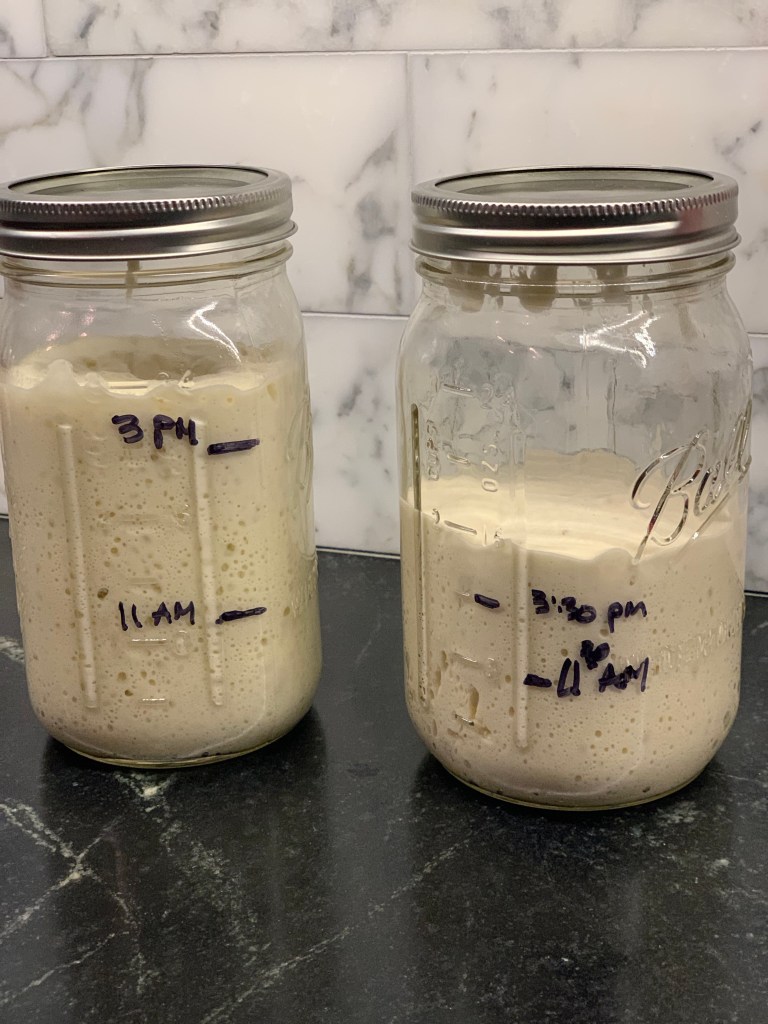
After feeding my sourdough starter with bread flour & water, it doubled in size in 4 hours.

After about a week, I noticed the lid kept popping off of the container and a layer of liquid had formed on top. I reached out to Jenny and she advised that it was probably telling me that it needed to be fed. I took a few notes and then consulted a few websites to learn more, and immediately became confused as there are so many different recipes for maintaining sourdough starter and most strongly suggest the use of a kitchen scale for precise measurements or risk of failure. As I’ve mentioned previously, I much prefer cooking to baking for the very reason of the precision required for baking, so I wasn’t sure about this “gift” at this point, as it was beginning to feel like more of a project. I managed to find a site that gave suggested measures in ounces and cups, so I commenced with the first feeding and then waited to see if anything happened. I was delighted to see that in a short time the mixture was rising and in four hours had doubled- I hadn’t killed it! I called Jenny to report my success and she told me that this starter is strong stuff, hers having come from her sister in law in San Francisco, who in turn received it from her sister in law in Louisiana.

Now that I had fed my starter and it was flourishing, it was time to bake. With the only ingredients being flour, water, salt and the starter (which is simply flour and water), I was’t sure how this was going to end up with tasty bread, but I figured I had nothing to lose and I owed it to my thoughtful friend to give it a go. The dough seemed pretty sticky, but I resisted the temptation to add more flour since my focaccia also has a sticky dough and it comes out crunchy and delicious every time.

Voila! Sourdough Bread! I wasn’t sure how it would taste, but it was delicious and reminded me of my grandfather (Papa), who used to bring back sourdough bread when he traveled to San Francisco. Dennis popped some in the toaster and said it was “awesome”, so I toasted up a slice and made avocado toast, which was so tasty. After the initial success, I decided to try to recreate the fantastic olive bread that Publican Quality Meats sells (from Publican Quality Breads, not open for retail sales) which I love and use to make decadent croutons for my Caesar Salad. The first one needed a little work with the olive distribution, but it tasted exactly like PQM’s and the croutons were great. When you feed your starter you are supposed to discard all but 1/2 cup, so I’ve since been re-gifting to friends, though the batch I sent to my sister in law never arrived, so we think it might be a science project gone wrong. . . the starter may have been too active for shipping and actively fermenting exploded. SO, I’ll try again, but make sure it is in a container with plenty of room to expand, after all it is a living thing!

SOURDOUGH BREAD

ktinakelleher
This bread is so easy and delicious you may never buy a loaf again. The most important ingredient is mature sourdough starter, which you can keep in your refrigerator and feed once a week until you are ready to bake.
Other than the starter, you need TIME, as the dough will need to proof for 8-12 hours before you can bake it. The amount of time to proof will vary depending on a number of factors, including temperature (70-80* is ideal)and humidity. The warmer it is, the less time the dough will take to proof and the more humid it is, you may need to add more flour so the dough isn't too sticky.
Depending on your schedule, you can either prepare the dough in the evening and allow it to proof overnight and bake in the morning, or prepare it in the morning and bake in the evening. If you're an early bird, you can make your dough, proof and bake in time for dinner.
Once you master the basic sourdough, try adding olives (my favorite), herbs, nuts or seeds. You can also experiment with other types of flour, such as whole wheat, rye, etc.
Prep Time 12 hours
Cook Time 45 minutes
Course BREAD
Cuisine American
Servings 1 Loaf (Boule)

Equipment

  • Dutch Oven (I use a 5 1/2 quart Le Creuset)
  • Large Bowl
  • DRY Measuring cups
  • Measuring spoons
  • 2 Cup or larger LIQUID measuring cup
  • Rubber spatula (or Spoonula)
  • Disposable kitchen gloves (I like the Nitrile ones)
  • Parchment Paper or Baking Sheets (I prefer the individual parchment baking sheets, so much easier)

Ingredients
  

  • 1/3 Cup Sourdough Starter heaping
  • 1 3/4 Cups Water (warm) (make sure the water is not above 120*)
  • 4 1/4 – 4 1/2 Cups Bread Flour (start with 4 1/4 cups)
  • 2 tsp fine Sea Salt

Instructions
 

  • If it has been a while since you fed your starter, then you will need to feed it 8 hours before baking to ensure it has at least doubling in size, which means it is strong enough to make the bread rise. If you have been feeding your starter regularly, you can use it straight from the fridge as long as it has been fed within 7 days.
  • Place 4 1/4 cups of flour and 2 tsp of sea salt in a large mixing bowl.
  • Measure a heaping 1/3 cup of the starter in a dry measuring cup. It will be quite sticky. Add the starter to the water, after a couple of seconds it should float, which means your starter is strong and active.
  • Whisk the starter and the water together until the starter is dissolved and you have a murky liquid.
  • Mix the wet and dry ingredients with a rubber spatula (Spoonula) until a shaggy dough begins to form. The dough will be quite stiff and at this point you may wish to ditch the spatula and use your hands.
  • Using your hands (with disposable gloves), knead the dough until all of the flour is incorporated and there are no dry streaks or lumps. If the dough is sticking to your gloves (and to the sides of the bowl), add more flour, 2 TBSP at a time and work it into the dough.
  • Continue to add a bit more flour until the dough no longer sticks to your gloves or the sides of the bowl.
  • Continue to knead the dough until it is fairly smooth and form it into a ball.
  • Cover the dough with plastic wrap or a damp kitchen towel and allow to proof for at least 8 and up to 12 hours in a warm place free of drafts. The ideal temperature is 70-80*.
  • After "proofing" your dough should have risen and approximately doubled. It should have a curved dome and look a bit like a distended belly. If you gently poke it with a floured finger, it should slowly come back.
  • Line a clean bowl with baking parchment. Make sure to use a parchment that can take high heat, as you will be baking at 450-475*. I prefer the brand IF YOU CARE, available at Whole Foods, Target, Amazon and many other specialty stores and buy the pre-cut sheets, which are so much easier to work with.
  • With wet fingers (or using gloves), scrape the dough away from the bowl and gather it into a ball. Grabbing one side, lift it with both hands and raise it high above the bowl and allow it to stretch. As it returns to the bowl, fold it over itself. It will be sticky, but should not be too loose or stick to the bowl once you gather it together. If it is sticking to the bowl, add a touch more flour, a tablespoon at a time.
  • Wait about 90 seconds and repeat the stretching 2 more times. (During the 3rd stretch, the dough may not stretch as high and may require you to pull from all sides.) After the 3rd stretch, mound the dough into the parchment lined bowl, shaping it so the "seam" is on the bottom. Dust the dough lightly with flour and place in the refrigerator while you heat your dutch oven.
  • At this point you may refrigerate your dough for up to 3 days before baking.
  • Heat oven to 475* (or 450* on convection setting, which is what I use).
  • Place the dutch oven (covered) in the oven while it is preheating and allow it to heat for 45 minutes to an hour.
  • When the oven is ready, remove the dough from the refrigerator. Using kitchen shears or a very sharp knife, cut a long slice in the top of the dough or several slices to make an X or flower pattern.
  • Carefully remove the dutch oven and remove the lid. Lift the dough by the corners of the parchment and place in the dutch oven. (I leave the dutch oven on the rack and remove the lid, drop in the dough and replace the lid.)
  • Cover and bake for 25 minutes.
  • Remove lid and bake for an additional 15-20 minutes until dark golden brown.
  • Remove to a rack and allow to cool for an hour before slicing.

Notes

KTINA’S TIPS
  • If you are lucky enough to have a friend (like me) to share starter with you then you are good to go.  I have shared my starter with many friends, who have shared with others, so it has proliferated all over the place now.  I’m happy to send some to you if you don’t know someone who has some.   Otherwise, if you’re have the time and up for the challenge, you can easily make your own starter in about a week. There are many websites, including King Arthur, that provide instructions.   
  • If you keep your starter in the fridge and it has been fed within the past 7 days, you can use it directly from the fridge, but I have found better results when I leave the starter on the counter for about a 1/2 hour before preparing the dough. you should notice it rising while it comes to room temperature.  
  • THE FLOAT TEST – if you are not sure if your starter is good to make bread or needs to be fed, try dropping a spoonful of starter into a cup of warm water.  Wait a minute or so, and if the dollop floats to the top, then your starter is strong enough to make bread – bake away!  
  • I have found my best loaves are made with starter that has been fed within 4 days, as they seem to rise a bit higher producing loaves that a little less dense. 
  • Friends have suggested that once they have formed their loaf they let the dough rise a little bit more (another couple hours on the counter) and get fluffier loaves.   
  • FEEDING YOUR STARTER – Once a week or each time you bake
    1. Mix 1/2 Cup starter with 3/4 Cup plus 2 TBSP All purpose flour and 1/2 Cup warm water.
    2. Place into a wide mouth mason Jar (1 quart) and place the cover askew to allow air to get in.  Let sit in a warm place for up to 8 hours or until it has doubled in size.
    3. Secure the cover and store in the refrigerator until you are ready to bake. 
    4. Discard the remainder of the old starter or share with a friend or discover a recipe that calls for “sourdough discard”.  
  • There is no limit to how frequently you can feed your starter.  If you are baking frequently, you will need to feed it more frequently since you will only have enough starter to make 2 loaves of bread and still have enough to feed and keep it going.
  • NEED MORE TIME?  Once you have formed your loaf, you can refrigerate it for up to 3 days before baking.  I have also found that by placing my dough in my kitchen in the winter (which is about 60*) that the proofing can go as long as 16 hours without overproofing . , , or just pop it in the fridge.  
  • IN A RUSH?  You can speed up the proofing process by placing your dough in a warmer environment . . . in the summer I place mine in our sunroom which does not have air conditioning and it is ready in 8 hours . . . I also tried putting it in the garage on a hot day (securely covered, of course) and it was ready in 6 hours.  DO NOT place it in your oven with the light on, as it will get too warm and overproof.  
  • OLIVE BREAD
    1. Substitute 1 1/4 Cups Whole Wheat flour for a cup of the Bread flour (ie:  3 Cups bread flour and 1 1/4 Cups whole wheat flour). 
    2. Stretch the proofed dough as above, but after the 3rd stretch turn it onto a lightly floured surface and press out (like you’re making pizza).
    3.   Sprinkle 1 Cup mixed pitted olives and press in lightly.  (I like to use a blend of pitted Castelveltrano and Kalamata olives, but experiment with what you like.)
    4. Roll the dough over, jelly roll style and then form into a ball, securing the seam at the bottom, place in the parchment lined bowl, dust with flour and place in the fridge while the dutch oven heats and bake in the same manner as above.
Keyword Baking, Bread, Sourdough, Sourdough Bread

As I mentioned in one of my early posts “A Taste for Thai Food”, I began experimenting with making Thai Curry Pastes when we lived in Argentina due to the lack of availability of tasty Thai food. Thai Curry Paste is a blend of aromatic herbs, spices and chilies that are pureed to a fine paste which you then fry in oil and whisk in coconut milk to make a sauce. The coconut milk tames the heat of the chilies, so even if you don’t care for things too spicy, you can tone it down to accommodate your palate. The addition of protein such as chicken, beef, pork, tofu or fish along with vegetables finishes the “curry” which is then served over rice to make a complete, tasty meal. The pastes are also key ingredients to other sauces and soups such as Tom Yum Goong (Hot & Sour Shrimp Soup) and Tom Kha Gai (Coconut Chicken Soup).

Clockwise from top left: Coriander seeds, Cumin seeds, Green Chilies (Jalapeno, Serrano and Thai “bird” chilies), Garlic, Red Chilies (Fresno & Thai “bird” chilies), Lemongrass, Galangal & Kaffir Lime Leaves.

Now that I’m in back in the US, I can certainly simply buy curry paste in a jar, but I find that making it from scratch is really worth the time and effort, as the taste is so much fresher. While my local Whole Foods usually has fresh lemongrass, chilies and sometimes even galangal, a trip to the Asian markets just a few miles to the north usually provides me everything I need at a fraction of the cost. When we were at the Cape for the summer, I couldn’t find lemongrass, galangal or Kaffir lime leaves anywhere, so I ended up ordering online and was able to get what I needed within 2 days through Etsy. As I had to improvise when we lived in Argentina and some ingredients were not reliably available, so too did I have to pivot when I learned a friend is allergic to shrimp and I would not be able to serve the curry due to the shrimp paste that is typically included. I found that anchovy paste was a perfect substitute, with no discernible difference in the taste, and now I use it all the time so that I don’t have to be concerned about a shellfish allergy when menu planning.

THAI CURRY PASTES

ktinakelleher
These pastes are the basis for Thai Green and Red Curries. I typically make the Green with chicken and the Red with pork or beef, you can use any protein, including seafood or tofu with either. I also the pastes to make sauces to serve as an accompaniment with grilled fish, pork or chicken along with a mango or pineapple salsa. The Green is a bit more herbacious and citrusy due to the additional Coriander seed and the absence of dried chilies. The process is the same for both, with the addition of the soaked dried red chilies for the Red.
While this may seem tedious to try to source the ingredients, it is so much better and fresher tasting than most store bought curry pastes that have preservatives to extend their shelf life. These make about 2 cups of each, so I divide them into small containers store some in the refrigerator for use within 2-3 weeks, share some with foodie friends and freeze the rest. You can also freeze it in individual portions (about 2 TBSP) in plastic bags.
Course Main Course
Cuisine Asian, Southeast Asian, Thai
Servings 2 Cups of Paste

Equipment

  • Food Processor
  • Spice. Grinder, Coffee Grinder or Mortar & Pestle

Ingredients
  

GREEN CURRY PASTE

  • 1 1/2 TBSP Coriander Seeds whole
  • 1 TBSP Cumin Seeds whole
  • 1/2 tsp Black Peppercorns whole
  • 1/2 tsp Kosher Salt Mortons
  • 4 stalks fresh Lemongrass tender purple section only, about 4"
  • 4 slices fresh Galangal about 1/2" slices
  • 8-10 fresh Jalapeno peppers, stems removed (use 8 if using Serranos)
  • 2 fresh Serrano peppers, stems removed
  • 20 Green Thai "bird" chilies, stems removed
  • 6 Cloves Garlic, peeled
  • 2 Large Shallots, peeled
  • 1 bunch fresh Cilanto Roots (or stems if you can't find cilantro with roots (Conserve leaves for another purpose)
  • 8 fresh Kaffir Lime Leaves, spines removed
  • 1 TBSP Anchovy Paste (1/2 tube) OR 1 tsp Shrimp Paste

RED CURRY PASTE

  • 1 TBSP Coriander Seeds whole
  • 2 tsp Cumin Seeds whole
  • 1/2 tsp Black Peppercorns whole
  • 1/2 tsp Kosher Salt Morton's
  • 5 stalks fresh Lemongrass tender midsection only, about 4"
  • 4 slices fresh Galangal (about 1/4" slices)
  • 8 fresh Fresno Chilies fresh, stems removed
  • 12 dried long red Chilies, such as New Mexico Hatch (hot), soaked in hot water for 20 minutes, stems removed and liquid drained.
  • 20 Red Thai "bird" Chilies, stems removed
  • 6 cloves Garlic, peeled
  • 2 large Shallots, peeled
  • 8 fresh Kaffir Lime Leaves spines removed
  • 1 bunch fresh Cilanto Roots (or stems if you can't find cilantro with roots (Conserve leaves for another purpose)
  • 1 TBSP Anchovy Paste (1/2 tube) OR 2 tsp Shrimp Paste

Instructions
 

  • In a small saute pan, toast the Coriander, Cumin, Salt and Peppercorns over medium-high heat until fragrant. Toss or stir frequently to make sure the seeds don't burn.
  • Transfer the toasted spices to a spice grinder or coffee grinder and process to a fine powder.
  • Place the lemongrass and galangal in the bowl of a food processor fitted with a steel blade and pulse to chop. Galangal is quite coarse, so I find it helps to cut your slices into smaller pieces.
  • Add the cilantro roots, shallots, garlic and lime leaves and pulse a few times.
  • Add all of the chilies, spices and anchovy (or shrimp) paste and process until a fairly smooth paste forms, scraping down the sides frequently and mixing to make sure no large chunks remain. Be patient here, as it is a very fibrous mixture of ingredients and how quickly it blends together will depend on how powerful your food processor is.
  • Transfer to airtight container(s) and store in the refrigerator for 2-3 weeks or freeze.

Notes

KTINA’S TIPS
  • This is another recipe that I tend to double when I make it due to the labor intensiveness of the process, and then I share with friends who are fans and keep several containers in my freezer.  It’s a great project for a cold or rainy day, or that day that you have to be home for a repairman, etc.  
  • I have a Magimix food processor which has a very powerful motor and a large bowl that allows for a double batch (just barely).  If you have another brand, you may find that you can only make a single batch (which makes a lot, so unless you have a lot of friends that you plan to share with, doubling isn’t necessary).  
  • If you have Asian grocery stores near you, it’s worth heading there as you are likely to find all of the ingredients you need, particularly lemongrass, galangal, kaffir lime leaves, shrimp paste (if using) and chilies.  You will also find the prices to be much more reasonable, since many restaurants do their shopping at these stores and buy in bulk.  If you don’t have the good fortune of having an Asian market near you, or can’t readily locate the ingredients, you can source them online through many sources such as Amazon, Etsy and some other specialty food websites.
  • Many grocery stores stock fresh jalapenos, serranos and fresno chilies (which look like a red jalapenos, but they are actually different and have a firmer texture that is much better here), as well as Thai “bird” chilies.  Look for chilies that are firm and free of blemishes.  If you can’t find them easily, you can source them online including at Amazon and Etsy, which serve as go between for small specialty vendors.  I had great luck with Melissa’s Produce (melissas.com) for Fresno chilies when I could not find them anywhere.  
  • If you can’t find cilantro with roots, which can be difficult, use the stems instead.  When I can find cilantro with their roots attached, I grab it and rush to the Asian market to get the other ingredients as the results are really better with the roots. 
  • I usually slice my chilies in half to help the food processor . . . if you find brown/black seeds when you slice, toss them as they are starting to go off.  
  • I use Hot New Mexico Hatch chilies for the dried red chilies.  They are available at many grocery stores, or readily available from many online sources.  They don’t weigh much, so don’t order the 5 pound bag like I did or you’ll have enough for your lifetime.
  • When soaking your dried chilies, they will float to the top, so I place a small plate or saucepan lid on them to keep them submerged.  Make sure to take off the stems and drain the water.  
  • I use an old coffee grinder that I keep for the sole purpose of grinding spices and it works beautifully.  It is really important to grind your spices, as the food processor will leave you with large chunks of peppercorns and coriander seeds, which are unpleasant in your curry.  
  • Traditional Thai curry pastes call for fermented shrimp paste, but since several friends have shrimp allergies, I have substituted anchovy paste with equal success and now simply use that . . . plus it’s much easier to find, especially if you don’t have an Asian market near you.  
Keyword Curry, Green Curry, Sitr Fry, Thai Basil, Thai Curry, Thai Green Curry, Thai Green Curry Paste, Thai Red Curry, Thai Red Curry Paste

GREEN CURRY with CHICKEN

ktinakelleher
Whether using Green or Red Curry Paste, the process is the same as outlined here. I use the vegetables that most frequently turn up in this classic, but feel free to experiment with any protein or vegetables that you like or have on hand.
Course Main Course
Cuisine Thai

Equipment

  • Deep Saute Pan or Wok

Ingredients
  

  • 2 Boneless, skinless Chicken Breast halves cut into 2" pieces
  • 2 TBSP Canola or Peanut Oil
  • 2-3 TBSP Green Curry Paste 2 for less spicy, 3 for more
  • 1 can Coconut Milk
  • 1-2 TBSP Fish Sauce
  • 1-2 TBSP Palm Sugar or Light Brown Sugar
  • 4 fresh Kaffir Lime Leaves, spines removed substitute dried if you can't find fresh
  • 1 Red Bell Pepper, cored, seeded and cut into 2" chunks
  • 1 8 ounce package Button Mushroom, cleaned
  • 1 Cup fresh Green Beans cut into 2-3" pieces
  • 1/4 Cup Cilantro leaves and/or Thai Basil leaves.

Instructions
 

  • Pan sear chicken in a saute pan in a bit of oil over medium high heat until it is lightly browned all over. Remove from the pan and drain. (The chicken does not need to be cooked through, as it will finish in the curry sauce.)
  • If using the same pan, wipe out any juice from the chicken. Add another TBSP of oil and when it is hot, add the curry paste and stir fry until fragrant, about 2 minutes.
  • Whisk in the Coconut milk a little at a time, starting with the cream at the top of the can. Allow to come to a boil before adding more of the milk, whisking constantly.
  • Reduce heat to medium (or medium low) and add the Kaffir Lime Leaves, 1 TBSP Fish Sauce and 1 TBSP Sugar and cook for 2-3 minutes, reducing heat so that it just simmering.
  • Taste the sauce and adjust if it needs a bit more Fish Sauce and/or Sugar.
  • At this point, if you are not ready to eat (or your rice is not ready), cover and turn off the heat until you are ready to eat.
  • Increase the heat to medium-high and add the chicken and mushrooms to the sauce. Cover the pan and allow to cook for 3-4 minutes until the mushrooms have released their liquid, stirring occasionally to ensure the meat doesn't stick to the pan.
  • Then the mushrooms have cooked, add the green beans and cook, covered, for 1 minute then add the peppers. Cook for 2-3 minutes and sprinkle with Cilantro leaves or Thai Basil leaves.
  • Serve immediately with Jasmine or Basmati Rice.

Notes

KTINA’S TIPS
  • Use the same process for Red Curry regardless of what protein you choose.
  • I think it makes a big difference to pan sear your meat, chicken or tofu before adding to the sauce, otherwise the meat will “stew” and it’s juices will water down the curry.
  • The curry should have a spicy, sweet, salty flavor from the paste, coconut milk, fish sauce and sugar and the lime leaves brighten it lending a citrusy note.  
  • If your sauce is too spicy, add more coconut milk.  Not spicy enough, add more curry paste.  
Keyword Green Curry Chicken, Thai Curry, Thai Green Curry

Pimento Cheese is another retro item that seems to be in vogue right now. Long a southern staple, and indeed the first time I tried it was a number of years ago when friends of my parents were visiting from LIttle Rock, Arkansas and Kathy whipped up a batch for a snack with crackers during cocktail hour. I thought it was mighty tasty, but I can’t say that I thought much about it for years (of course, I was living overseas for a long time, which might explain it) until I noticed it popping up on menus and on the shelves of local delis in the past couple of years. It even showed up on television on one of the cooking shows where a restaurant was using it for their cheeseburgers.

So just what is pimento cheese, and why all the fuss? Pimento cheese is a blend of mayonnaise, cheddar cheese and pimentos, which are a mild red pepper, which is used as a spread for crackers, a dip for vegetables (most popularly celery) and as a filling for sandwiches. Pimento cheese sandwiches are such a fabric of the south that they are traditionally served at The Masters golf tournament and there was a brouhaha a few years ago when they changed vendors and the taste was not the same. Apparently they fixed the problem, as there was plenty of discussion about those sandwiches during the television coverage of this year’s event a few weeks ago. It is frequently referred to as the “caviar of the south”, which may be a stretch, and clearly it’s not for everyone as Viggo Mortenson’s character in “Green Book” rejected it when he tried it. If it is your cup of tea, it’s addictive.

Publican Quality Meats is a deli/butcher/restaurant in Chicago that makes a killer pimento cheese and I would often pick up a container when I was purchasing other items. My sister in law, Julia, gave me a copy of The Publican’s cookbook a few years ago and I was delighted to see that the recipe was included, especially since at $10 a half pint it make way more sense (and cents) to make it. I was, however, disappointed when I made it the first time and found it did not resemble what I purchased at PQM . . . it was soupy and way too spicy, even for me who loves heat. So, I set about making adjustments and this is the result. It’s so easy and a crowd pleaser, Julia having declared it “like crack”.

PIMENTO CHEESE

ktinakelleher
This is a real crowd pleaser and is so quick, easy and super versatile as a spread for crackers, dip for veggies, traditional southern pimento sandwiches, as a topping for burgers, in a grilled cheese, and the list goes on.
Course Appetizer, Dips, Sandwiches, Spreads
Cuisine American

Ingredients
  

  • 3/4 Cup Mayonnaise (Hellman's)
  • 2/3 Cup Chopped PImentos or PIquillo Peppers (1 6 ounce jar piquillo peppers)
  • 1/2 tsp Cayenne Pepper
  • 2 tsp Black Pepper, freshly ground
  • 2 Cups Extra Sharp Cheddar Cheese, grated (8 ounces)

Instructions
 

  • Whisk together the mayonnaise and peppers until smooth.
  • Squeeze the pimentos, or chopped Piquillo peppers in paper towels to remove the excess moisture and fold into the mayonnaise mixture.
  • Fold in the cheese until well blended.
  • Refrigerate at least one hour before serving.

Notes

KTINA’S TIPS:
  • You can use chopped pimentos that are widely available in most supermarkets, but when I couldn’t find them on one occasion, I substituted Piquillo peppers, which are a small Spanish pepper. I liked the flavor and now use them whenever I make this.
  • Drying the pimentos really well with paper towels is key so that your spread isn’t too soupy.
  • I prefer to use white cheddar and use the sharpest cheddar I can find.  Cabot makes a “Seriously Sharp” cheddar, and Hook’s 6 year (if you can find it) are two good ones.  
Keyword Pimento, Pimento Cheese